Blog
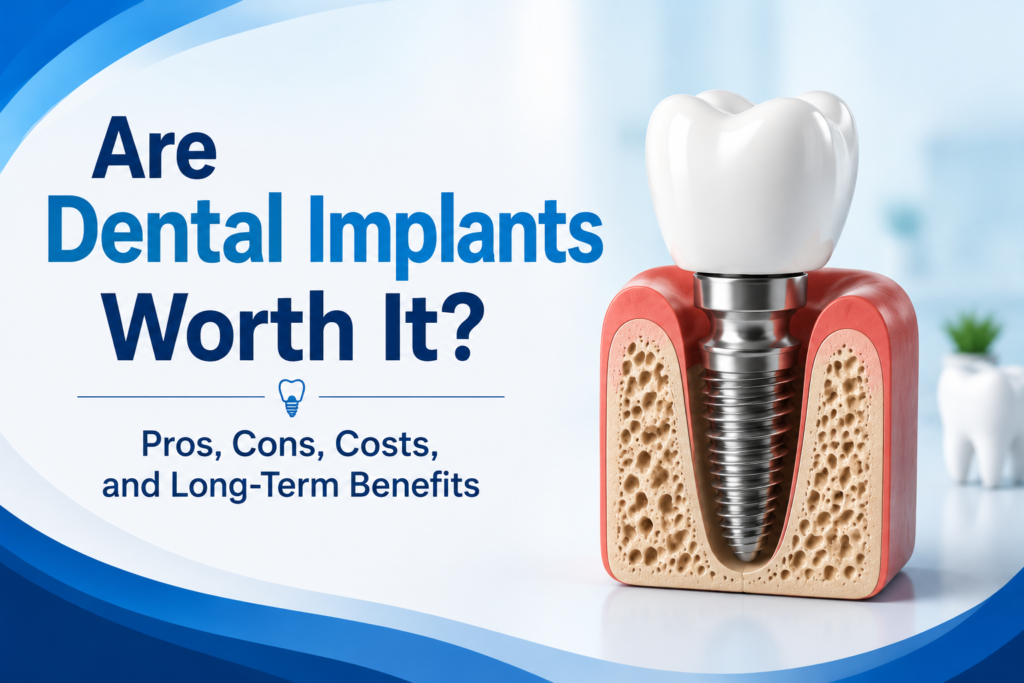
Are Dental Implants Worth It? Pros, Cons, Costs, and Long-Term Benefits
Losing a tooth can affect more than just your smile. It can make eating certain foods uncomfortable, change the way you speak, and reduce your confidence in social situations. It can also impact your oral health, as missing teeth may cause neighboring teeth to shift and lead to gradual bone loss in the jaw.
Fortunately, modern dentistry offers several options for replacing missing teeth, and dental implants are widely considered one of the most effective long-term solutions. Although dental implants usually require a greater investment than dentures or dental bridges, many patients find that the benefits outweigh the initial cost.
If you are considering dental implants, it is important to understand both their advantages and limitations. This guide explains the pros, cons, costs, and long-term benefits of dental implants to help you make an informed decision.
What Are Dental Implants?
Dental implants are artificial tooth roots made from titanium or other biocompatible materials. They are surgically placed into the jawbone to support a replacement tooth, dental bridge, or full arch of replacement teeth.
Once the implant is placed, the jawbone gradually fuses with it through a natural healing process. This creates a stable foundation for a custom-made dental crown that closely resembles a natural tooth in both appearance and function.
Unlike removable dentures, dental implants become a permanent part of your mouth and do not rely on neighboring teeth for support.
Why Are Dental Implants So Popular?
Dental implants have become one of the most recommended tooth replacement options because they restore both the visible tooth and its root.
Replacing the tooth root helps maintain jawbone health while providing excellent stability for chewing and speaking. Many patients also appreciate that implants look and feel very similar to natural teeth, allowing them to smile with confidence.
With proper care, dental implants can provide reliable function for many years, making them an attractive long-term solution.
The Benefits of Dental Implants
Dental implants offer several advantages that contribute to their popularity among patients and dentists.
They Look and Feel Like Natural Teeth
One of the greatest benefits of dental implants is their natural appearance.
The custom-made dental crown is carefully designed to match the color, size, and shape of your surrounding teeth. Once treatment is complete, most people cannot tell the difference between the implant and your natural teeth.
The secure fit also makes the implant feel much like a natural tooth during everyday activities.
They Restore Chewing Ability
Missing teeth can make it difficult to eat certain foods, leading many people to avoid healthy options that require more chewing.
Dental implants provide excellent stability, allowing you to comfortably enjoy foods such as apples, vegetables, meat, and nuts without worrying about movement or discomfort.
This improved chewing ability supports better nutrition and overall health.
They Help Preserve Jawbone Health
One of the unique benefits of dental implants is their ability to reduce bone loss.
When a tooth is missing, the jawbone beneath it no longer receives the stimulation created by chewing. Over time, the bone begins to shrink, which can change the shape of your face and affect neighboring teeth.
Because dental implants function like natural tooth roots, they continue stimulating the jawbone and help preserve its strength and volume.
They Protect Neighboring Teeth
Unlike a traditional dental bridge, dental implants do not require healthy neighboring teeth to be reshaped for support.
Each implant stands independently, preserving the natural structure of the surrounding teeth. This conservative approach helps maintain better long-term oral health.
They Can Last for Many Years
Dental implants are known for their durability.
With good oral hygiene and regular dental care, the implant itself can often last twenty years or longer. Many implants remain successful for a lifetime. Although the dental crown attached to the implant may eventually require replacement because of normal wear, the implant foundation frequently remains stable for decades.
This longevity makes dental implants a valuable long-term investment.
They Improve Confidence
Many people feel self-conscious after losing a tooth, especially if the gap is visible when they smile.
Dental implants restore the appearance of a complete smile while eliminating concerns about dentures slipping or shifting. Patients often report greater confidence when speaking, laughing, and interacting with others after treatment.
The Disadvantages of Dental Implants
Although dental implants provide many benefits, they may not be the ideal solution for every patient.
Higher Initial Cost
Dental implants usually have a higher upfront cost than dentures or dental bridges.
This cost reflects the surgical procedure, custom restoration, and advanced materials used during treatment. While the initial expense is greater, many patients find that the long-term durability reduces the need for future replacements.
Treatment Takes Time
Unlike some other tooth replacement options, dental implant treatment cannot usually be completed in a single appointment.
After the implant is placed, the jawbone needs several months to heal before the permanent crown is attached. Although the waiting period requires patience, it creates the strong bond that gives implants their exceptional stability.
Surgery Is Required
Dental implant placement involves a minor surgical procedure.
Most patients tolerate the procedure well with local anesthesia, but some people may feel anxious about undergoing oral surgery. Your dentist will explain the treatment process, discuss pain management options, and answer any questions before treatment begins.
Not Everyone Is an Immediate Candidate
Successful dental implant treatment requires healthy gums and enough jawbone to support the implant.
If bone loss has already occurred, additional procedures such as bone grafting may be necessary before implants can be placed. Certain medical conditions and smoking habits may also affect healing and require careful evaluation.
How Much Do Dental Implants Cost?
The cost of dental implants varies depending on several factors, including the number of teeth being replaced, the complexity of the procedure, and whether additional treatments are required.
Some patients may need bone grafting, tooth extraction, or gum treatment before implant placement, which can increase the total cost.
Although dental implants generally require a larger initial investment than other replacement options, their durability and lower maintenance needs often provide greater value over time. Your dentist can provide a personalized treatment plan and detailed cost estimate after examining your oral health.
Are Dental Implants More Cost-Effective in the Long Term?
Many patients find that dental implants provide excellent long-term value.
Dentures and dental bridges may require repairs, adjustments, or replacement over the years. Dental implants, on the other hand, are designed to provide a stable and durable solution that often lasts much longer.
In addition to reducing future replacement costs, implants help preserve jawbone health and protect neighboring teeth, potentially preventing additional dental problems in the future.
When viewed over many years, dental implants are often considered a worthwhile investment.
Who Is a Good Candidate for Dental Implants?
Many adults with one or more missing teeth are suitable candidates for dental implants.
You may be a good candidate if you have:
- Healthy gums with no active gum disease.
- Enough jawbone to support the implant.
- Good overall oral health.
- A commitment to maintaining excellent oral hygiene.
- Realistic expectations about the treatment timeline.
Even if you have experienced bone loss, your dentist may recommend procedures that make implant treatment possible.
How Long Do Dental Implants Last?
Dental implants are among the longest-lasting dental restorations available.
The implant itself can often remain successful for twenty years or longer with proper care, and many last a lifetime. The dental crown attached to the implant usually lasts between ten and fifteen years before normal wear makes replacement necessary.
Regular dental examinations, daily brushing, and cleaning between your teeth all contribute to the long-term success of dental implants.
How to Care for Dental Implants
Caring for dental implants is similar to caring for your natural teeth.
Brush your teeth twice every day using fluoride toothpaste and clean between your teeth daily with dental floss or interdental brushes. Maintaining healthy gums is especially important because gum disease can affect the tissues supporting the implant.
Attend regular dental checkups and professional cleanings so your dentist can monitor the health of both the implant and the surrounding tissues.
Avoid using your teeth to bite hard objects, and wear a custom mouthguard if you participate in contact sports or grind your teeth during sleep.
Are Dental Implants Worth It?
For many patients, the answer is yes.
Although dental implants require a greater initial investment and a longer treatment process than some alternatives, they provide benefits that are difficult to match. Their natural appearance, excellent chewing ability, long lifespan, protection of the jawbone, and preservation of surrounding teeth make them one of the most effective solutions for replacing missing teeth.
The best choice depends on your oral health, lifestyle, budget, and long-term goals. A consultation with your dentist can help determine whether dental implants are the right option for your specific needs.
Conclusion
Dental implants offer a reliable, long-lasting solution for replacing missing teeth while improving both oral health and quality of life. They provide excellent stability, preserve jawbone health, protect neighboring teeth, and restore the confidence that comes with a complete smile.
Although the treatment involves a higher upfront cost and requires several months to complete, many patients consider dental implants a worthwhile investment because of their durability and long-term benefits. If you are missing one or more teeth, speaking with your dentist about dental implants can help you explore whether this treatment is the best solution for restoring your smile and maintaining your oral health for years to come. Contact us for more information
Frequently Asked Questions (FAQs) About Dental Implants
What are dental implants?
Dental implants are artificial tooth roots made from titanium or other biocompatible materials. They are placed into the jawbone to support a replacement tooth, dental bridge, or full arch of replacement teeth.
How do dental implants work?
After placement, the implant gradually fuses with the jawbone through a natural healing process. This creates a stable foundation for a custom-made dental crown that looks and functions like a natural tooth.
Why are dental implants popular?
Dental implants restore both the visible tooth and the tooth root. They provide stability for chewing and speaking, help maintain jawbone health, and look and feel similar to natural teeth.
Do dental implants look like natural teeth?
Yes. The dental crown is customized to match the color, size, and shape of surrounding teeth, making it difficult to distinguish from natural teeth.
Can dental implants improve chewing ability?
Yes. Dental implants provide strong stability, allowing patients to eat foods such as apples, vegetables, meat, and nuts more comfortably without worrying about movement.

At Square One Health Group, we are a dedicated team of professionals providing compassionate, patient-focused heath care in Mississauga. We specialize in family medicine, preventive health, dental care and wellness, helping patients achieve long-term health through personalized care.
Tags: