Blog
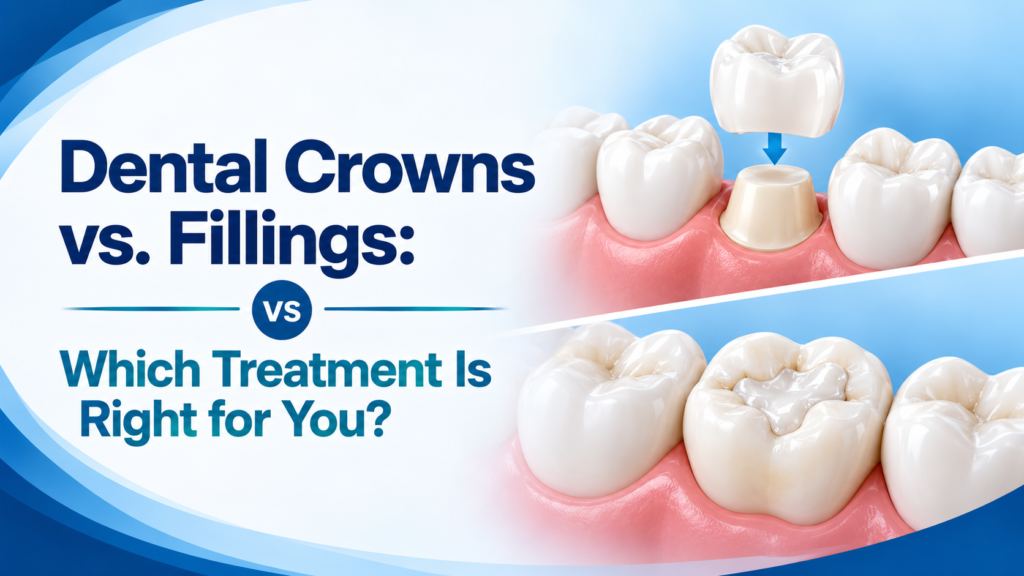
Dental Crowns vs. Fillings: Which Treatment Is Right for You?
When a tooth develops decay, a crack, or another type of damage, your dentist may recommend either a filling or a dental crown. Both treatments are designed to restore a damaged tooth, but they are used in different situations. Understanding the difference between dental crowns and fillings can help you feel more confident when discussing your treatment options with your dentist.
A filling is generally used to repair a smaller area of damage while preserving as much healthy tooth structure as possible. A dental crown, on the other hand, covers the visible portion of the tooth and is often recommended when the tooth has lost significant strength. The right choice depends on the condition of your tooth, the amount of damage, and your long-term oral health needs.
What Is Dental Filling?
A dental filling is a common treatment for a tooth affected by decay or minor damage. During the procedure, the dentist removes the damaged portion of the tooth, cleans the area, and fills the space with suitable material. The filling restores the tooth’s shape and allows you to chew normally again.
Composite fillings are particularly popular because they can be matched closely to the natural colour of your teeth. They are often appropriate when the cavity is relatively small or when enough healthy tooth structure remains to support the restoration.
What Is a Dental Crown?
A dental crown is a custom-made covering placed over a damaged or weakened tooth. Instead of repairing only one small area, a crown covers much of the visible tooth and provides additional protection. Crowns may be recommended when decay, cracks, large existing fillings, or other damage have significantly weakened the tooth.
Dental crowns can restore the tooth’s shape, appearance, and chewing function while helping protect the remaining structure. They can also be made to blend naturally with surrounding teeth, making them suitable for both functional and cosmetic concerns.
Dental Crowns vs. Fillings: What Is the Main Difference?
The biggest difference between a filling and a crown is the amount of tooth they restore and protect. A filling replaces the portion of the tooth that has been removed because of decay or damage, while a crown covers the tooth more extensively.
For a smaller cavity, placing a filling may be enough to restore the tooth without removing additional healthy structure. When a tooth has become substantially weakened, however, a filling may not provide the protection it needs. In such cases, a crown can offer broader coverage and help reduce the risk of the tooth breaking.
Your dentist will examine the tooth carefully before recommending either option. Digital X-rays and a thorough examination may also be used to determine how extensive the damage is and whether the tooth can be restored successfully.
When Is a Dental Filling Usually the Better Choice?
A filling may be suitable when tooth decay is limited and there is enough healthy enamel and tooth structure remaining. It can often be completed in one appointment and requires less alteration of the natural tooth than a crown.
Fillings are commonly considered for small to moderate cavities, particularly when the surrounding tooth remains strong. They can also be useful for repairing certain areas of worn or damaged teeth. After treatment, good brushing, daily flossing, healthy eating habits, and regular dental visits can help protect the restoration and the rest of your smile.
When Might a Dental Crown Be Recommended?
A dental crown may be recommended when a tooth has extensive decay or has become too weak for a filling to provide adequate support. A tooth with a large filling may also become vulnerable to cracks over time, particularly when much of its original structure has already been lost.
Crowns can be particularly useful for teeth that have suffered substantial damage or fractures. They may also be recommended after certain dental procedures when additional protection is needed. The purpose is not simply to cover the tooth, but to restore its strength and allow it to function comfortably as part of your bite.
If a dentist has recommended a crown, delaying treatment may allow existing damage to progress. In some situations, untreated decay can eventually reach the inner part of the tooth and lead to infection or the need for more extensive treatment.
Are Dental Crowns More Durable Than Fillings?
Both fillings and crowns can provide long-lasting results when they are properly placed and cared for. However, their durability depends on factors such as the location of the tooth, the amount of remaining tooth structure, your bite, oral hygiene, and the type of restoration used.
A filling is intended to repair a specific area, so it may not be suitable when the surrounding tooth is severely weakened. A crown provides broader coverage and can help protect a compromised tooth from further damage. This does not mean that a crown is always better than a filling; the most appropriate restoration is the one that matches the condition of the individual tooth.
What Factors Does a Dentist Consider?
There is no single treatment that is right for every damaged tooth. Your dentist will consider the size and location of the decay, the strength of the remaining tooth, whether the tooth is cracked, and whether there are signs of infection or other concerns.
Your symptoms also matter. Sensitivity to hot or cold, pain when chewing, swelling, or a persistent toothache can indicate that a problem needs prompt attention. A comprehensive dental examination can help identify the cause and determine whether a filling, crown, or another treatment would provide the best result.
Dental Crowns and Fillings in Mississauga
If you are searching for dental crowns in Mississauga or need treatment for a cavity, choosing a dental practice that takes time to understand your concerns can make the experience more comfortable.
The practice offers a range of dental services, including general cleanings, porcelain crowns, emergency dentistry, dental implant restoration, professional teeth whitening, and periodontal care. Patients can discuss their symptoms and treatment options with the dental team before deciding how to proceed.
For patients who have concerns about an existing restoration, routine examinations are also important. Dental visits allow the dentist to monitor fillings and crowns, check for new decay, and identify potential problems before they become more serious.
How Can You Protect Your Filling or Crown?
Once your tooth has been restored, daily care remains important. Brush your teeth twice a day with fluoride toothpaste, clean between your teeth every day, and attend regular dental examinations. Avoid using your teeth to bite hard objects, as unnecessary pressure can damage both natural teeth and dental restorations.
If you notice persistent sensitivity, pain when biting, a loose restoration, or a crown or filling that has broken, contact your dentist rather than waiting for the problem to resolve on its own. Early assessment can make it easier to address the issue and protect the remaining tooth structure.
Frequently Asked Questions About Dental Crowns and Fillings
Is a filling better than a crown?
Neither treatment is automatically better. A filling is usually appropriate when the damage is limited and the tooth remains strong, while a crown may be more suitable when substantial tooth structure has been lost. Your dentist can determine which option is appropriate after examining the tooth.
Can a badly damaged tooth still receive a filling?
Sometimes, but it depends on how much healthy tooth structure remains. If the tooth is too weak to support a filling, a crown may provide better protection. A dental examination is necessary to determine whether the tooth can be restored with a filling.
Are dental crowns painful?
The tooth is generally numbed during crown treatment to keep you comfortable. Some sensitivity can occur after treatment, particularly as the tooth adjusts to the restoration. If discomfort continues or becomes severe, your dentist should evaluate the tooth.
How long can a dental crown last?
The lifespan of a crown varies depending on the material, location of the tooth, bite forces, and oral hygiene. Good daily care and regular dental examinations can help maintain the crown and the tooth underneath it.
Can a filling be replaced with a crown?
Yes. If an existing filling becomes too large, fails, or the tooth becomes weakened, your dentist may recommend replacing the filling with a crown. The decision depends on the condition of the remaining tooth structure.
Which Treatment Is Right for You?
Choosing between a dental filling and a crown should not be based solely on cost or appearance. The most important consideration is the condition of the tooth and the type of restoration needed to protect it for the future. A smaller cavity may require only a filling, while a significantly weakened tooth may benefit from the additional coverage provided by a crown.
If you are experiencing tooth sensitivity, pain, visible damage, or a broken filling or crown, a dental examination can help determine what is happening. Square One Health Group provides comprehensive dental care in Mississauga and can help you understand your treatment options based on your individual needs.

At Square One Health Group, we are a dedicated team of professionals providing compassionate, patient-focused heath care in Mississauga. We specialize in family medicine, preventive health, dental care and wellness, helping patients achieve long-term health through personalized care.
Tags: