
Blog
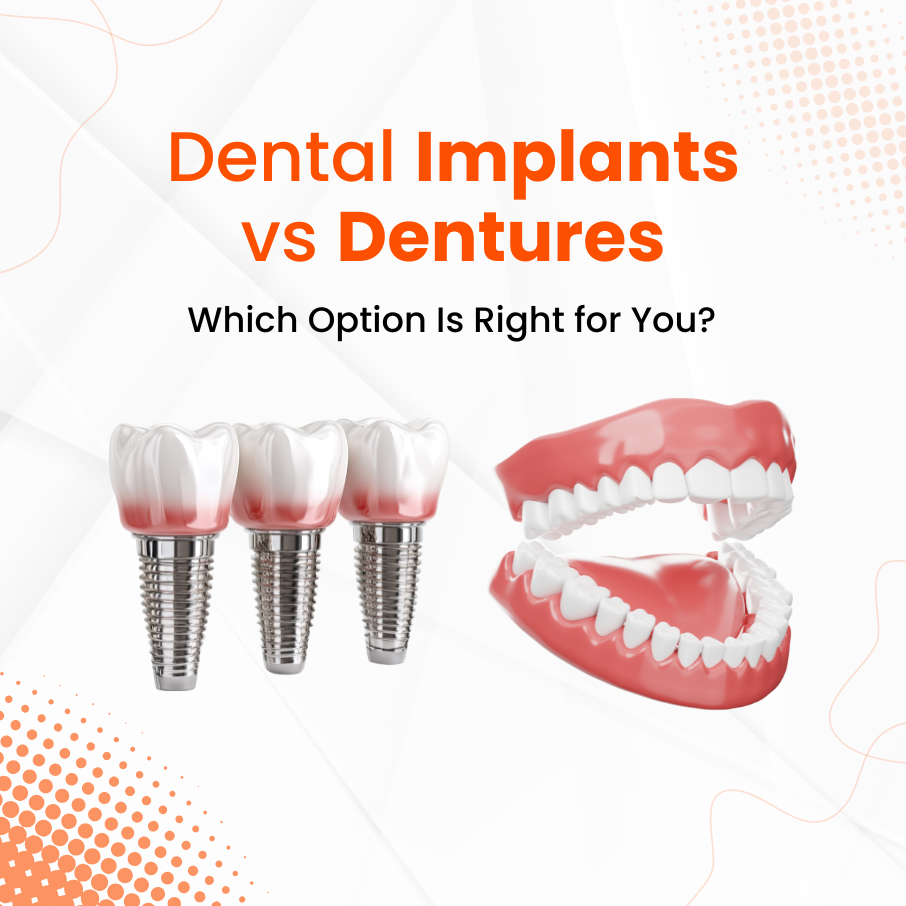
Dental Implants vs Dentures: Which Option Is Right for You?
Missing teeth can significantly affect your daily life. From difficulties in chewing food to feeling self-conscious about your smile, tooth loss impacts both oral health and overall confidence. Fortunately, modern dentistry offers effective solutions to restore missing teeth and bring back a natural-looking smile.
Two of the most common tooth replacement options are dental implants and dentures. While both treatments help replace missing teeth, they differ in terms of durability, comfort, maintenance, cost, and long-term oral health benefits.
If you are considering restoring your smile, understanding the differences between dental implants and dentures can help you choose the option that best fits your needs, lifestyle, and budget.
Understanding the Importance of Replacing Missing Teeth
Tooth loss can occur due to several reasons, including tooth decay, gum disease, injury, or aging. While some people may think missing teeth are only a cosmetic concern, they can actually lead to several oral health problems if left untreated.
When a tooth is lost, the surrounding teeth may begin to shift into the empty space. This can cause bite problems and misalignment. In addition, the jawbone in the area may start to deteriorate because it no longer receives stimulation from the tooth root. Over time, this bone loss can change facial structure and make a person appear older.
Replacing missing teeth helps maintain proper oral function, supports jawbone health, improves speech, and restores confidence in your smile. Dental implants and dentures are two reliable solutions that dentists often recommend depending on a patient’s specific needs.
What Are Dental Implants?
Dental implants are one of the most advanced and long-lasting solutions for replacing missing teeth. A dental implant is a small titanium post that is surgically placed into the jawbone to act as an artificial tooth root. Once the implant integrates with the bone, a connector called an abutment is attached, and a custom-made dental crown is placed on top.
The crown is designed to match the color, size, and shape of your natural teeth, creating a realistic and natural appearance. Because the implant is anchored directly into the jawbone, it provides exceptional stability and functions similarly to a natural tooth.
Dental implants can be used to replace a single missing tooth, multiple teeth, or even support a full set of replacement teeth.
Benefits of Dental Implants
Dental implants offer several advantages that make them a popular choice for many patients seeking permanent tooth replacement.
One of the biggest benefits is their natural appearance. Implants closely resemble natural teeth in both function and aesthetics. Most people cannot tell the difference between an implant and a real tooth.
Another important advantage is durability. With proper oral hygiene and regular dental checkups, dental implants can last for decades and often a lifetime. This makes them a long-term investment in oral health.
Dental implants also help prevent bone loss. Because the titanium post acts like a tooth root, it stimulates the jawbone and maintains its strength and structure. This helps preserve facial shape and prevents the sunken appearance that sometimes occurs after tooth loss.
Additionally, implants provide strong chewing ability. Patients can eat most foods comfortably without worrying about their teeth slipping or moving.
Potential Limitations of Dental Implants
Although dental implants provide many benefits, they may not be suitable for everyone.
The procedure requires minor oral surgery to place the implant into the jawbone. After the implant is placed, it takes several months for the bone to fuse with the implant before the final crown can be attached. This means the treatment process may take longer compared to other options.
Dental implants may also have a higher initial cost than dentures. However, their durability and longevity often make them more cost-effective over time because they usually do not need frequent replacement.
Another consideration is bone density. Patients must have enough healthy jawbone to support the implant. In cases where bone loss has occurred, additional procedures such as bone grafting may be required.
What Are Dentures?
Dentures are removable appliances designed to replace missing teeth and surrounding tissues. They are custom-made to fit comfortably over the gums and restore both function and appearance.
Dentures have been used for many years as a reliable and affordable solution for tooth replacement. Advances in dental technology have improved the comfort, fit, and natural appearance of modern dentures.
There are two main types of dentures: full dentures and partial dentures.
Full dentures are used when all teeth in the upper or lower jaw are missing. These dentures rest directly on the gums and are held in place by suction or denture adhesives.
Partial dentures are used when some natural teeth remain. They consist of replacement teeth attached to a gum-colored base and are supported by a metal or plastic framework that attaches to the remaining teeth.
Benefits of Dentures
Dentures offer several advantages, especially for patients looking for a non-surgical tooth replacement option.
One of the main benefits is affordability. Dentures are generally more cost-effective than dental implants, making them a practical choice for many patients.
Dentures can also be created relatively quickly compared to implant treatments. Once the impressions of your mouth are taken, the dentures can usually be fabricated and fitted within a few weeks.
Another benefit is that dentures can replace multiple missing teeth at once. For individuals who have lost most or all of their teeth, full dentures provide a complete smile restoration.
Modern dentures are also designed to look more natural than older versions. They can restore facial fullness and improve a person’s ability to chew and speak.
Potential Drawbacks of Dentures
Despite their advantages, dentures also have some limitations that patients should consider.
Because dentures are removable, they may shift or move slightly while eating or speaking. Some people require time to adjust to wearing them comfortably.
Dentures also require daily removal and cleaning to maintain proper hygiene. Over time, they may need adjustments or replacements as the shape of the gums and jawbone changes.
Another consideration is that dentures do not stimulate the jawbone like dental implants. This means bone loss may still occur gradually over time, which can affect the fit of the dentures.
Comparing Dental Implants and Dentures
When deciding between dental implants and dentures, several factors should be considered, including durability, comfort, maintenance, and long-term oral health.
Dental implants are a permanent solution that closely mimics natural teeth. They offer excellent stability, require minimal maintenance beyond regular oral hygiene, and help preserve jawbone health. However, they involve a surgical procedure and a higher initial investment.
Dentures, on the other hand, are removable and more affordable. They provide a quicker solution for replacing multiple missing teeth but may require adjustments and replacements over time. While they restore appearance and function, they do not prevent bone loss.
For many patients, the decision depends on their oral health condition, budget, lifestyle preferences, and long-term goals.
Who Is a Good Candidate for Dental Implants?
Dental implants are often recommended for individuals who want a permanent and stable tooth replacement option. Ideal candidates typically have healthy gums, sufficient jawbone density, and good overall health.
People who are committed to maintaining proper oral hygiene and attending regular dental visits also tend to achieve the best results with implants.
Your dentist will evaluate your oral health, take X-rays or scans, and determine whether implants are the right option for your situation.
Who May Benefit More from Dentures?
Dentures may be a better choice for patients who have lost many or all of their teeth and prefer a non-surgical treatment option. They are also suitable for individuals who may not have enough jawbone to support dental implants or who are looking for a more budget-friendly solution.
In some cases, dentures can also be used temporarily while patients consider other long-term treatments.
Choosing the Right Tooth Replacement Option
Selecting the right tooth replacement treatment is an important decision that should be made with the guidance of a dental professional. Every patient’s oral health needs and lifestyle are unique.
A dentist will evaluate factors such as the number of missing teeth, bone health, overall oral condition, and personal preferences before recommending the most suitable treatment.
For many patients, dental implants provide the most natural and long-lasting results. However, dentures remain an effective solution for restoring smiles and improving oral function.
Final Thoughts
Both dental implants and dentures are effective solutions for replacing missing teeth and restoring your smile. Dental implants provide a long-lasting, natural-looking option that also helps preserve jawbone health, while dentures offer a more budget-friendly, non-surgical alternative.
The right choice depends on your unique oral health needs, lifestyle, and financial considerations. By consulting with the experienced professionals at Square One Health Group, you can receive personalized guidance and a customized treatment plan tailored to your goals.
Replacing missing teeth does more than enhance your appearance—it improves your ability to eat, speak, and maintain overall oral health. Whether you opt for implants or dentures, taking this step is a valuable investment in your long-term well-being.
Contact us for more information.
Frequently Asked Questions (FAQs)
Which is better, dental implants or dentures?
Both dental implants and dentures are effective solutions for replacing missing teeth, but the best option depends on your needs. Dental implants are a permanent solution that offers better stability, durability, and jawbone support. Dentures are more affordable and non-surgical but may require adjustments and replacements over time. Your dentist can help determine which option is best for your oral health and lifestyle.
How long do dental implants last?
Dental implants are designed to be a long-term tooth replacement solution. With proper oral hygiene and regular dental checkups, implants can last 20 years or more, and many patients keep them for a lifetime. The dental crown attached to the implant may need replacement after several years due to normal wear.
How long do dentures typically last?
Most dentures last 5 to 10 years before they need to be replaced or adjusted. Over time, changes in the jawbone and gum structure can affect how dentures fit, which may require relining or replacement to maintain comfort and function.
Are dental implants painful?
The dental implant procedure is usually performed under local anesthesia, so patients typically feel little to no pain during the surgery. Some mild discomfort or swelling may occur after the procedure, but it usually subsides within a few days and can be managed with medication recommended by your dentist.
Can dentures look natural?
Yes, modern dentures are designed to look very natural. They are custom-made to match the shape, size, and color of natural teeth. Advances in dental technology allow dentures to restore a natural-looking smile and facial structure.
Who is a good candidate for dental implants?
Good candidates for dental implants usually have healthy gums, adequate jawbone density, and good overall health. Individuals who practice good oral hygiene and attend regular dental checkups are more likely to experience successful long-term implant results.
Are dentures comfortable to wear?
Most patients adapt to dentures over time, but it may take a few weeks to get used to them. Initially, some people may experience minor discomfort or difficulty speaking and chewing. Proper fitting and adjustments by a dentist can significantly improve comfort.
Can dental implants replace multiple teeth?
Yes, dental implants can replace a single tooth, multiple teeth, or even support a full arch of teeth using implant-supported bridges or dentures. This flexibility makes implants a versatile option for many patients with missing teeth.
Do dental implants require special care?
Dental implants do not require special care beyond good oral hygiene practices. Brushing twice daily, flossing regularly, and visiting your dentist for routine checkups are essential to maintain the health and longevity of your implants.
How do I choose between dental implants and dentures?
The decision depends on several factors, including your oral health, budget, number of missing teeth, and personal preferences. A consultation with a dental professional can help you understand the benefits of each option and determine the best treatment plan for restoring your smile.
Tags: