Blog
How Long Do Dental Crowns Last?
A dental crown is a reliable way to restore and protect a damaged, weakened, or severely worn tooth. Crowns are commonly used after root canal treatment, to repair broken teeth, or to protect teeth with large fillings. If you have recently received a crown, one of the most common questions you may have is: How long do dental crowns last?
In general, most dental crowns last around 10 to 15 years. However, with excellent oral hygiene and proper care, some crowns can remain functional for 15 to 20 years or even longer. Several factors can influence their lifespan, including the crown material, oral hygiene, eating habits, teeth grinding, and the health of the underlying natural tooth.
Understanding these factors can help you protect your crown and maintain your smile for years to come.
What Is a Dental Crown?
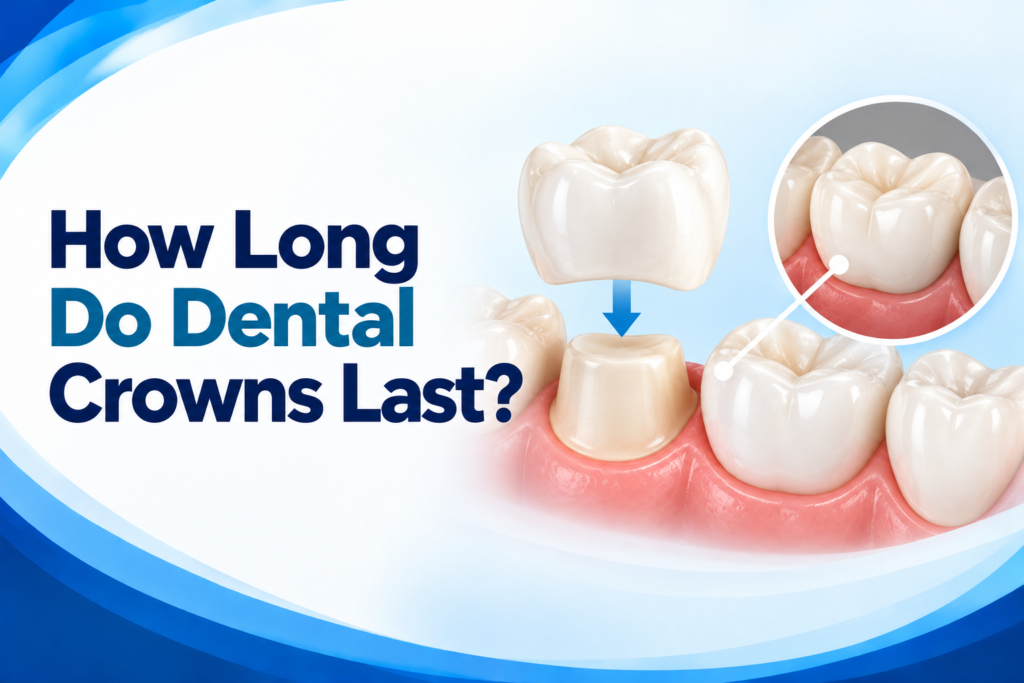
A dental crown is a custom-made restoration that fits over an entire damaged or weakened tooth. It restores the tooth’s shape, strength, size, and appearance while providing protection against further damage.
Dentists may recommend crowns for teeth that have:
- Severe decay
- Large fillings
- Cracks or fractures
- Significant wear
- Extensive damage
- Undergone root canal treatment
Modern crowns are designed to look and function much like natural teeth. Depending on your needs and the location of the tooth, your dentist may recommend porcelain, ceramic, zirconia, porcelain-fused-to-metal, or metal crowns.
How Long Do Dental Crowns Typically Last?
Most dental crowns last approximately 10 to 15 years. However, this is an average rather than a strict expiration date.
A well-maintained crown may last 15 to 20 years or longer, particularly when the supporting tooth and surrounding gums remain healthy. On the other hand, crowns may need replacement sooner if they experience significant wear, become damaged, or develop problems with the underlying tooth.
The longevity of your crown depends largely on how well you care for it and the amount of stress it experiences every day.
Read more : Dental Crowns: Are They Really Worth the Cost for Decayed Teeth?
Factors That Affect How Long a Dental Crown Lasts
1. Crown Material
The material used to make your crown can influence its durability.
Porcelain and ceramic crowns are popular because they provide a natural-looking appearance and can closely match surrounding teeth.
Metal crowns are extremely durable and can withstand significant chewing pressure, making them particularly useful for back teeth.
Porcelain-fused-to-metal crowns combine strength with a natural appearance.
Zirconia crowns are also known for their strength, durability, and attractive appearance.
Your dentist will recommend the most suitable material based on the location of the tooth, your bite, cosmetic preferences, and overall dental health.
2. Oral Hygiene
Good oral hygiene is essential for maintaining a dental crown.
Although the crown itself cannot develop a cavity, the natural tooth underneath it can. Plaque and bacteria can collect around the crown’s edges, potentially causing decay or gum disease.
Brush twice daily with fluoride toothpaste and clean between your teeth every day to help protect the crowned tooth.
3. Teeth Grinding and Clenching
Teeth grinding, also known as bruxism, can place excessive pressure on dental crowns. Repeated grinding may cause a crown to chip, crack, loosen, or wear down prematurely.
If you grind your teeth while sleeping, your dentist may recommend a custom night guard. This can reduce pressure on your crown and help protect your natural teeth.
4. Eating Habits
Your diet and chewing habits can also affect crown longevity.
Avoid using your crowned tooth to bite hard objects such as ice, hard candies, pens, or packaging. These habits can put unnecessary pressure on the restoration and increase the risk of cracks or chips.
5. Regular Dental Checkups
Regular dental examinations allow your dentist to monitor your crown and the tooth underneath it. Professional cleanings can also remove plaque and tartar that may be difficult to eliminate through brushing alone.
Routine dental visits can help identify small problems before they become more serious.
Signs Your Dental Crown May Need Replacement
Dental crowns do not necessarily need to be replaced simply because they have reached a certain age. However, certain warning signs may indicate that your crown requires professional evaluation.
Loose Crown
If your crown moves or feels loose when you bite or chew, contact your dentist. A loose crown can allow bacteria to enter underneath it and potentially damage the supporting tooth.
Cracks or Chips
Visible cracks, chips, or fractures may compromise the strength and protective function of a crown. Your dentist can determine whether it can be repaired or needs replacement.
Pain or Sensitivity
Persistent pain, sensitivity, discomfort when chewing, or swelling around a crowned tooth should be evaluated. These symptoms may indicate decay, infection, gum problems, or another issue affecting the tooth underneath.
Changes in Appearance
An older crown may become worn, rough, discolored, or noticeably different from the surrounding teeth. If the crown’s appearance has changed significantly, your dentist can determine whether replacement would be beneficial.
How Can You Make a Dental Crown Last Longer?
You can take several simple steps to extend the life of your crown:
- Brush your teeth twice a day with fluoride toothpaste.
- Floss or use interdental cleaners every day.
- Avoid chewing ice and other hard objects.
- Do not use your teeth to open packages.
- Wear a mouthguard during contact sports.
- Consider a night guard if you grind or clench your teeth.
- Attend regular dental checkups and professional cleanings.
- Address tooth or gum problems as soon as possible.
A crown does not require complicated maintenance. Treat it much like your natural teeth while paying particular attention to the gumline and areas between your teeth.
Can a Dental Crown Last a Lifetime?
Although some dental crowns can remain functional for several decades, there is no guarantee that a crown will last a lifetime.
Daily chewing forces, changes in your bite, oral hygiene, teeth grinding, and natural aging can eventually affect the restoration. The condition of the natural tooth underneath the crown is also an important consideration.
With proper care and regular dental monitoring, however, many crowns provide long-lasting protection and function.
Frequently Asked Questions About Dental Crowns
How often do dental crowns need to be replaced?
Most dental crowns last about 10 to 15 years, although some may last 15 to 20 years or longer. Replacement depends on the condition of the crown and the health of the underlying tooth.
Can a dental crown last 20 years?
Yes. A well-maintained crown can sometimes last 20 years or longer. Good oral hygiene, regular dental visits, avoiding damaging habits, and managing teeth grinding can improve its longevity.
Do crowns get cavities?
The crown itself cannot develop a cavity because it is made from artificial material. However, the natural tooth underneath or around the crown can develop decay if plaque and bacteria are not properly controlled.
What happens if a dental crown falls out?
If your crown falls out, keep it in a clean container and contact your dentist as soon as possible. Avoid chewing on that side of your mouth until you have received professional advice.
Can I eat normally with a dental crown?
Yes. Once the crown has been properly placed and any initial sensitivity has settled, you can generally eat normally. However, it is best to avoid chewing extremely hard foods and objects that could damage the crown.
Is it painful to replace a dental crown?
Crown replacement is generally performed with local anesthesia when necessary, so you should not experience significant pain during the procedure. Your dentist will evaluate the tooth and explain what is involved before treatment.
How do I know if my crown is failing?
Signs may include looseness, pain, sensitivity, swelling, difficulty chewing, visible cracks, chips, or changes around the gumline. If you notice any of these symptoms, schedule a dental examination.
Do dental crowns require special care?
Crowns do not require complicated maintenance. Brush twice daily, clean between your teeth, maintain healthy gums, avoid damaging habits, and attend regular dental checkups.
Conclusion
Dental crowns are a durable and effective way to restore damaged or weakened teeth. Most dental crowns last approximately 10 to 15 years, while some can remain functional for 15 to 20 years or longer with proper care.
Their lifespan depends on several factors, including the crown material, oral hygiene, diet, bite pressure, teeth grinding, and the condition of the underlying tooth.
By maintaining good oral hygiene, avoiding hard or damaging habits, protecting your teeth from grinding, and attending regular dental checkups, you can help your crown last as long as possible. If you experience pain, sensitivity, swelling, looseness, or visible damage, contact your dentist promptly to prevent the problem from becoming more serious.

At Square One Health Group, we are a dedicated team of professionals providing compassionate, patient-focused heath care in Mississauga. We specialize in family medicine, preventive health, dental care and wellness, helping patients achieve long-term health through personalized care.
Tags: