Blog
How Long Do Dental Implants Last?
Losing a tooth can affect more than your smile. It can make eating uncomfortable, change the way you speak, and allow nearby teeth to shift into the empty space. Dental implants are a popular long-term solution because they replace the missing tooth from the root upward and provide a stable foundation for a replacement tooth.
But one of the most common questions patients have is, how long do dental implants last? With proper placement, good oral hygiene, and regular dental care, dental implants can last many years and, in some cases, can last for decades. Their lifespan depends on several factors, including your oral health, lifestyle, implant quality, and how well you care for your teeth and gums.
What Is a Dental Implant?
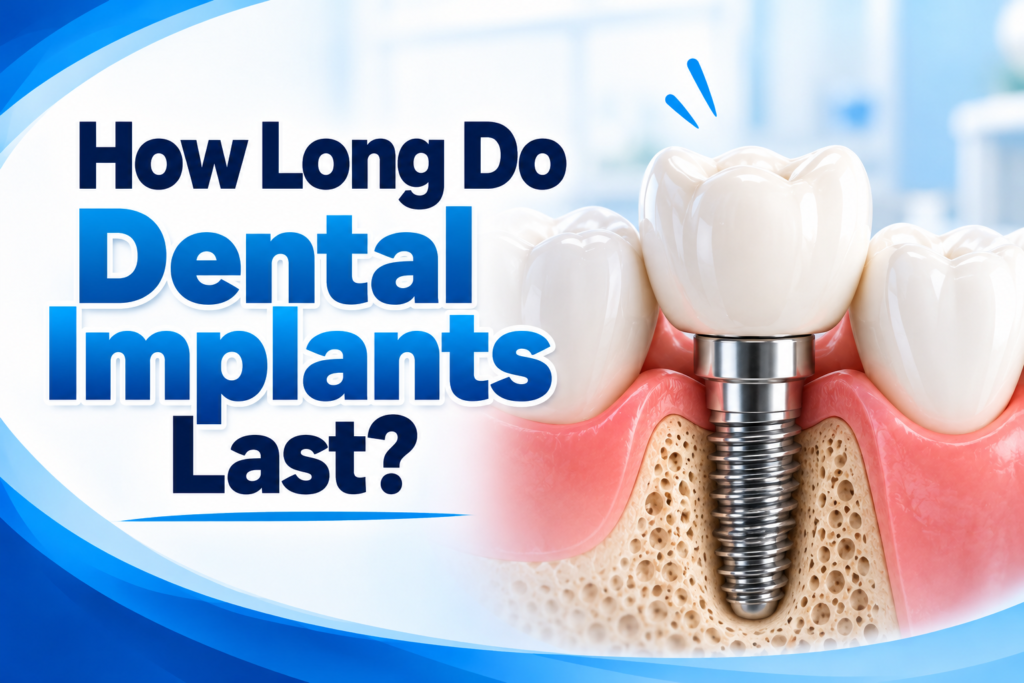
A dental implant is a small post, usually made from titanium or another biocompatible material, that is placed into the jawbone to replace the root of a missing tooth. Once the implant has healed and integrated with the surrounding bone, it can support a dental crown, bridge, or other restoration.
The implant itself is designed to be durable and resistant to decay. However, the visible crown attached to the implant does not necessarily last as long as the implant post. Understanding this difference is important when considering the long-term benefits of implant treatment.
How Long Do Dental Implants Typically Last?
Dental implants can often last 15 years or longer, and many can remain functional for several decades with appropriate care. Their exact lifespan cannot be guaranteed because every patient has different oral health conditions and habits.
The implant post is generally very durable because it is securely integrated with the jawbone. The crown, however, is exposed to everyday chewing forces and may eventually require replacement because of normal wear, damage, or changes in appearance.
A successful implant is therefore considered a long-term tooth replacement rather than a restoration that necessarily needs to be replaced on a fixed schedule.
What Determines How Long Dental Implants Last?
Oral Hygiene
Good oral hygiene is one of the most important factors affecting the long-term success of dental implants. Although an implant cannot develop a cavity like a natural tooth, the gums and bone surrounding it can still become infected.
Brushing twice a day, cleaning between your teeth, and following your dentist’s recommendations can help keep the tissues around the implant healthy. Regular professional cleanings can also remove plaque and buildup that may be difficult to manage at home.
Gum Health
Healthy gums provide important support for the tissues surrounding an implant. A condition called peri-implantitis can cause inflammation and bone loss around an implant and may threaten its stability if it is not treated.
Patients who have a history of gum disease may need closer monitoring and more careful maintenance. Treating existing gum problems before implant placement can also help create healthier conditions for treatment.
Bone Quality and Quantity
Dental implants depend on sufficient jawbone for stability. After tooth loss, the bone in that area can gradually shrink because it no longer receives stimulation from a natural tooth root.
If there is not enough bone, a dentist may recommend a bone graft or another procedure before placing the implant. Adequate bone support can contribute to proper healing and long-term stability.
Smoking and Tobacco Use
Smoking can interfere with healing and may increase the risk of complications following implant surgery. Tobacco use can also affect gum health and the tissues that support the implant.
If you smoke, your dentist may recommend reducing or stopping tobacco use before and after implant treatment. This can support healing and improve the long-term health of your mouth.
Teeth Grinding
Regularly grinding or clenching your teeth can place excessive pressure on an implant and its crown. Over time, this may contribute to wear, cracking, or other problems.
If you grind your teeth while sleeping, your dentist may recommend a custom night guard. Managing excessive pressure can help protect both implants and surrounding teeth.
Can Dental Implants Fail?
Dental implant failure is possible, although implants have a high rate of long-term success when appropriately planned and maintained. Problems can occur during the healing stage or later if the tissues around the implant become unhealthy.
Early failure may be associated with problems during healing or failure of the implant to properly integrate with the jawbone. Later problems can be related to infection, bone loss, excessive pressure, poor oral hygiene, or damage to the restoration.
Regular dental examinations allow your dentist to identify potential problems before they become more serious.
How Can You Make Dental Implants Last Longer?
Taking care of an implant is similar to caring for your natural teeth in many ways. You should brush thoroughly, clean between your teeth, and attend regular dental appointments.
It is also important to avoid using your teeth to open packages or bite extremely hard objects. These habits can damage both natural teeth and implant-supported restorations.
Your dentist may also recommend specific cleaning tools based on the type and position of your implant. Following those instructions consistently can help protect the surrounding gums and bone.
How Long Does an Implant Crown Last?
The implant post can potentially last for decades, but the crown may need replacement sooner. Many crowns can remain functional for around 10 to 15 years, although some last longer depending on the material, bite forces, oral hygiene, and daily habits.
A dental crown can become worn, chipped, stained, or damaged over time. Replacing the crown does not necessarily mean that the implant has failed. In many cases, the existing implant can continue supporting a new crown.
Are Dental Implants a Permanent Solution?
Dental implants are often described as a permanent tooth replacement option, but this does not mean they are guaranteed to last forever. Their long-term performance depends on the condition of the surrounding bone and gums, the quality of treatment, and ongoing maintenance.
The restoration attached to the implant may need to be repaired or replaced during your lifetime. Even so, implants can provide a stable and durable solution compared with many other tooth replacement options.
Frequently Asked Questions
Do dental implants last a lifetime?
Dental implants can last for decades, and some may remain functional for a lifetime. However, there is no way to guarantee a specific lifespan because oral health, lifestyle, and other factors differ between patients.
How often do dental implants need to be replaced?
The implant post may not need replacement if it remains healthy and stable. The crown or other restoration may require replacement sooner because it experiences everyday chewing and wear.
Can dental implants get cavities?
The implant itself cannot develop tooth decay because it is not a natural tooth. However, the gum tissue around the implant can become infected, making good oral hygiene essential.
Can smoking shorten the life of a dental implant?
Smoking can interfere with healing and increase the risk of problems affecting the gums and supporting bone. Your dentist can provide personalized advice if you smoke or use tobacco.
How do I care for dental implants?
Brush twice daily, clean between your teeth and around the implant, attend regular dental examinations, and follow your dentist’s specific maintenance instructions. Avoid habits that place unnecessary pressure on your teeth or restorations.
Final Thoughts
So, how long do dental implants last? With proper treatment and consistent care, the implant itself can remain functional for many years and potentially decades. Maintaining healthy gums, protecting the jawbone, avoiding tobacco, managing teeth grinding, and attending regular dental appointments can all support long-term success.
A dental implant is a significant investment in your oral health, so proper maintenance matters long after the procedure is complete. If you are considering dental implants, a dental professional can assess your bone health, gums, bite, and overall oral condition to determine whether implants are suitable for you.
Ready to explore your dental implant options? Contact Square One Health Group today to schedule a consultation and take the next step toward restoring your smile

At Square One Health Group, we are a dedicated team of professionals providing compassionate, patient-focused heath care in Mississauga. We specialize in family medicine, preventive health, dental care and wellness, helping patients achieve long-term health through personalized care.
Tags: