Blog
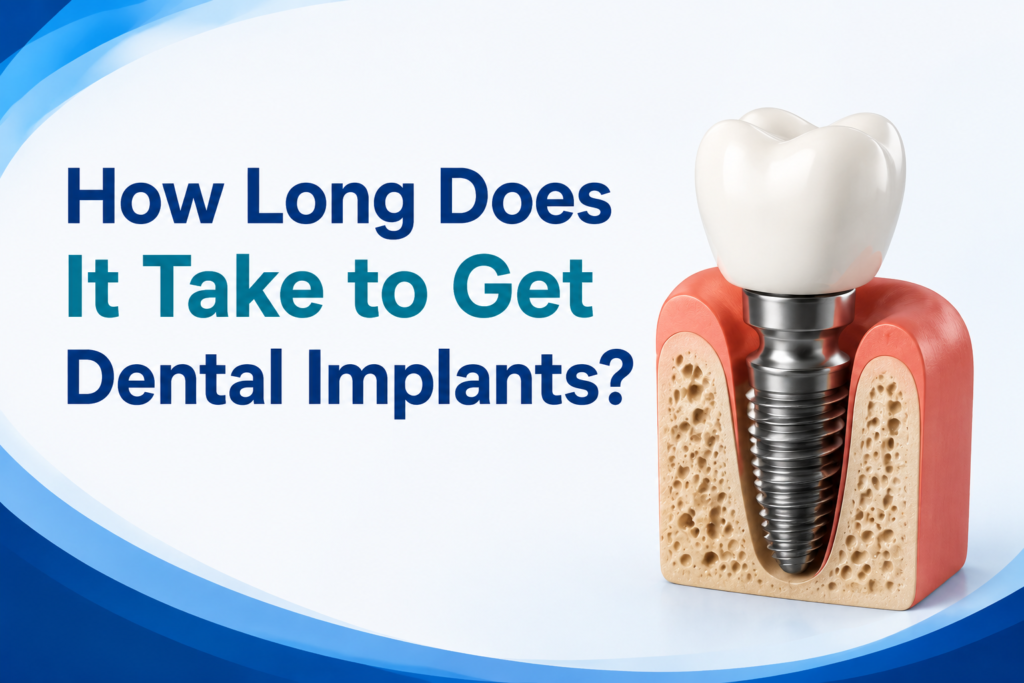
How Long Does It Take to Get Dental Implants?
If you are considering dental implants, one of the first questions you may have is how long the entire process takes. Unlike treatments such as dental fillings or dental crowns, dental implants cannot usually be completed in a single visit. The procedure involves several stages, each designed to ensure that the implant becomes a strong and lasting replacement for your missing tooth.
Although the complete dental implant process often takes several months, much of that time is dedicated to natural healing rather than active treatment. This healing period allows the implant to bond securely with the jawbone, creating a stable foundation for your replacement tooth.
Why Does the Dental Implant Process Take Time?
A dental implant is different from other tooth replacement options because it replaces both the visible tooth and its root.
After the titanium implant is placed into the jawbone, your body begins a natural healing process called osseointegration. During this stage, the jawbone gradually grows around the implant, creating a secure connection that allows it to function like a natural tooth root.
This healing process cannot be rushed because it is essential for the long-term success of the implant.
Step 1: Initial Consultation
The first step is a comprehensive dental examination.
Your dentist will evaluate your teeth, gums, and jawbone to determine whether dental implants are the right treatment for you. Digital X-rays or three-dimensional imaging may be taken to assess bone volume and identify the ideal location for the implant.
During this visit, your dentist will also review your medical history, discuss your treatment goals, and create a personalized treatment plan.
Step 2: Preparing for the Implant
Some patients are ready for implant placement immediately, while others require additional treatment beforehand.
If a damaged tooth needs to be removed, your dentist may recommend a tooth extraction before placing the implant. In some cases, the implant can be placed during the same appointment as the extraction, while in others, a healing period is recommended.
Patients who have experienced significant bone loss may also require a bone graft to strengthen the jawbone before implant placement.
The preparation stage varies depending on your individual needs and may add several weeks or months to the overall timeline.
Step 3: Dental Implant Placement
The dental implant is placed during a minor surgical procedure performed under local anesthesia.
The dentist carefully inserts the titanium implant into the jawbone in the area of the missing tooth. Most patients experience minimal discomfort during the procedure because the area is completely numbed.
The surgery itself usually takes between one and two hours, depending on the number of implants being placed.
After the procedure, you will receive instructions to support healing during the following days.
Step 4: Healing After Implant Placement
Healing is the longest part of the dental implant process.
Over the next three to six months, the jawbone gradually bonds with the implant. This natural process creates the strong foundation needed to support your replacement tooth for many years.
Most patients return to their normal daily activities within one or two days after surgery, although mild swelling and tenderness are common during the first few days.
While healing continues beneath the gums, you may receive a temporary replacement tooth if needed, particularly when replacing a front tooth.
Step 5: Placing the Abutment
Once the implant has successfully bonded with the jawbone, the next step is attaching the abutment.
The abutment is a small connector that joins the implant to the final dental crown. In many cases, placing the abutment is a simple procedure completed under local anesthesia.
After the abutment is attached, the surrounding gum tissue usually requires about one to two weeks to heal before the final restoration is placed.
Step 6: Attaching the Permanent Dental Crown
The final step is placing the custom-made dental crown.
Your dentist carefully checks the fit, bite, and appearance before securing the crown to the abutment. The crown is designed to match your natural teeth in color, size, and shape, providing a seamless appearance.
Once the crown is in place, your dental implant is fully restored and ready to function like a natural tooth.
How Long Does the Entire Process Take?
For most patients, the complete dental implant process takes between three and nine months.
Patients who do not require additional procedures often complete treatment in about three to six months. However, if bone grafting, tooth extraction, or extensive healing is necessary before implant placement, the timeline may extend to nine months or longer.
Although the process requires patience, the long-term results often make the waiting period worthwhile.
Read more ; What Can You Expect with Dental Implant Treatment?
What Factors Can Affect the Timeline?
Several factors influence how long dental implant treatment will take.
Bone Health
Healthy jawbone allows implants to be placed more quickly.
If bone grafting is required, additional healing time will be necessary before the implant can be inserted.
Number of Implants
Replacing multiple missing teeth usually requires more planning and treatment than replacing a single tooth.
The complexity of the case may affect the overall treatment schedule.
Overall Health
Your body’s natural healing ability plays an important role in the implant process.
Medical conditions such as uncontrolled diabetes or smoking may slow healing and increase the amount of time needed before the final restoration can be placed.
Oral Health
Healthy gums support successful implant treatment.
If gum disease is present, it must usually be treated before implant placement to reduce the risk of complications.
Can Dental Implants Be Done in One Day?
Some patients qualify for same-day dental implants, sometimes called immediate implants.
In carefully selected cases, the implant is placed immediately after tooth extraction, and a temporary crown may also be attached on the same day.
However, not everyone is a suitable candidate for this approach. Adequate bone support, healthy gums, and proper bite alignment are all important factors.
Your dentist will determine whether same-day implants are appropriate for your situation.
What Can You Expect During Recovery?
Most patients recover comfortably after dental implant surgery.
Mild swelling, tenderness, and slight bruising are common during the first few days. These symptoms usually improve with rest, following your dentist’s instructions, and taking any recommended medications.
Eating soft foods during the early stages of recovery helps protect the surgical area while healing progresses.
Most people return to work and normal daily activities within one or two days, depending on the complexity of the procedure.
How Can You Support Successful Healing?
Good aftercare helps promote successful healing and long-term implant success.
Brush your teeth carefully, following your dentist’s instructions around the surgical site. Continue cleaning between your teeth while avoiding unnecessary pressure on the implant area during the early stages of healing.
Avoid smoking, as it can interfere with healing and reduce the success rate of dental implants. Eating a balanced diet and attending all follow-up appointments also support healthy recovery.
Are Dental Implants Worth the Waiting Time?
Although dental implant treatment requires several months to complete, many patients believe the long-term benefits make the process worthwhile.
Dental implants provide excellent stability, preserve jawbone health, restore natural chewing ability, and closely resemble natural teeth. With proper care, they can last for decades, making them one of the most durable tooth replacement options available.
The time invested during treatment often results in many years of improved comfort, function, and confidence.
Conclusion
The complete dental implant process typically takes three to nine months, depending on your oral health, healing ability, and whether additional procedures such as bone grafting or tooth extraction are required. While much of this timeline is dedicated to natural healing and osseointegration, every stage plays an important role in creating a secure, long-lasting foundation for your replacement tooth. Dental implant treatment is typically completed over several visits, allowing your dentist to carefully monitor healing and ensure the best possible outcome.
Although the process requires patience, dental implants remain one of the most reliable and durable solutions for replacing missing teeth. They restore chewing function, help preserve jawbone health, prevent surrounding teeth from shifting, and provide a natural-looking smile that can last for many years with proper care. If you’re considering dental implants or exploring other restorative options, the experienced team at Square One Health Group’s Dental Services offers comprehensive, personalized treatment plans to help you achieve a healthy, confident smile. By following your dentist’s recommendations and maintaining excellent oral hygiene, you can maximize the long-term success of your dental implant and enjoy lasting oral health benefits. Contact us for more information.

At Square One Health Group, we are a dedicated team of professionals providing compassionate, patient-focused heath care in Mississauga. We specialize in family medicine, preventive health, dental care and wellness, helping patients achieve long-term health through personalized care.
Tags: