Blog
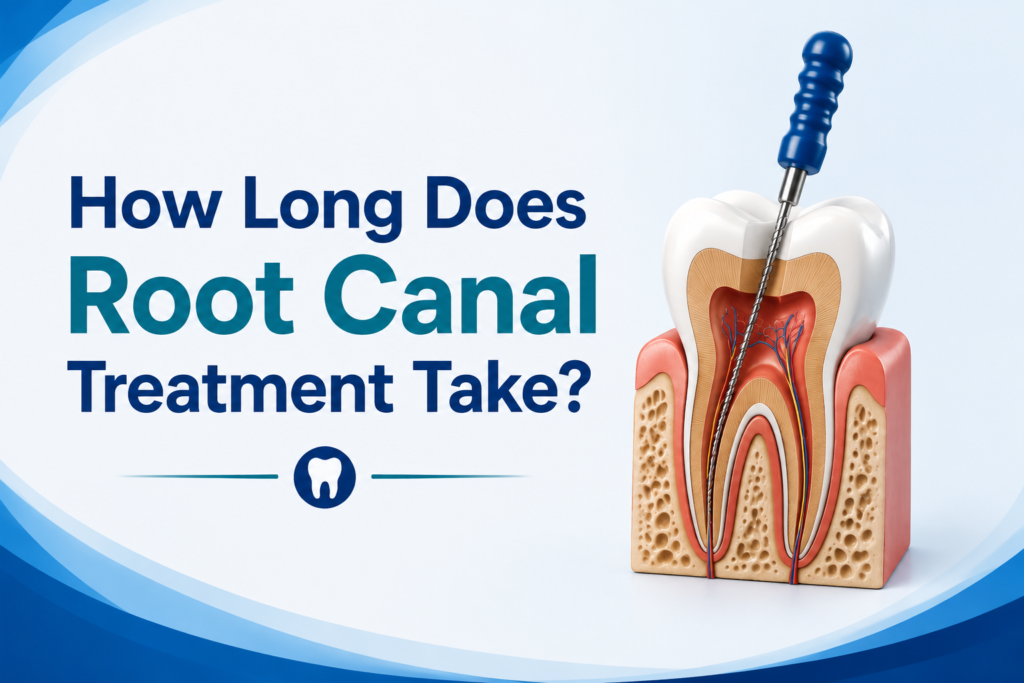
How Long Does Root Canal Treatment Take?
When your dentist recommends a root canal, one of the first questions that may come to mind is, “How long will the treatment take?” It is a reasonable concern, especially if you have a busy schedule or feel anxious about dental procedures. The good news is that modern root canal treatment is more efficient and comfortable than many people expect.
The time required for a root canal depends on several factors, including the location of the tooth, the severity of the infection, and whether additional procedures, such as placing a dental crown, are needed. While some cases can be completed in a single appointment, others may require two visits to ensure the tooth heals properly.
Understanding the treatment timeline can help you prepare for your appointment and feel more confident about the process. This guide explains how long a root canal usually takes, what influences the duration, and what you can expect during recovery.
What Is Root Canal Treatment?
Root canal treatment is a procedure that removes infected or damaged tissue from inside a tooth. The soft tissue, known as the pulp, contains nerves and blood vessels that help the tooth develop during its early years. Once the tooth is fully formed, it can function normally without the pulp.
During the procedure, the dentist removes the infected pulp, cleans and disinfects the root canals, fills the space with a special material, and seals the tooth. In most cases, a dental crown is later placed to restore the tooth’s strength and protect it from future damage.
The goal of root canal treatment is to eliminate infection, relieve pain, and preserve your natural tooth.
How Long Does a Root Canal Usually Take?
Most root canal procedures take between 60 and 90 minutes. Simple cases involving a front tooth can often be completed in about an hour, while more complex treatments involving larger teeth may take up to ninety minutes or longer.
Some patients complete the entire treatment in a single appointment. Others may need two visits, particularly if the infection is severe or if additional cleaning is necessary before the tooth is permanently sealed.
Your dentist will recommend the most appropriate treatment plan after examining your tooth and reviewing your dental X-rays.
Why Does Treatment Time Vary?
Every tooth is different, and several factors influence how long a root canal takes.
The Type of Tooth
Front teeth generally have one root canal, making them easier and quicker to treat. Premolars usually have one or two canals, while molars often contain three or four canals that require careful cleaning.
Because molars have more complex root structures, treatment generally takes longer than it does for front teeth.
The Severity of the Infection
If the infection is limited to the pulp, treatment may be completed during one visit. However, if the infection has spread beyond the root or caused an abscess, the dentist may need additional time to clean the area thoroughly.
In some cases, medication is placed inside the tooth between appointments to eliminate bacteria before the final filling is completed.
Previous Dental Work
Teeth that have large fillings, previous crowns, or earlier root canal treatment may require additional time. The dentist may need to remove old dental materials before cleaning the canals, making the procedure more detailed.
Difficulty Accessing the Tooth
Some teeth are more difficult to reach because of their position in the mouth. Limited access can increase the time required to complete the procedure carefully and accurately.
Can a Root Canal Be Completed in One Visit?
Yes, many root canals can be completed in a single appointment. Advances in dental technology have made it possible to clean and seal many infected teeth during one visit, especially when the infection is detected early.
Single-visit treatment is often suitable when:
- The infection is not severe.
- There is no significant swelling or abscess.
- The root canals can be cleaned completely during the appointment.
- The patient is comfortable throughout the procedure.
Completing treatment in one visit saves time while still providing excellent long-term results.
When Are Two Appointments Needed?
Some situations require a second visit to achieve the best outcome. This does not mean something has gone wrong. Instead, it allows the dentist to ensure the infection has been fully controlled before permanently sealing the tooth.
A second appointment may be recommended if:
- The tooth has extensive infection.
- An abscess is present.
- The canals are unusually narrow or curved.
- Medication needs to remain inside the tooth for several days.
- The procedure cannot be safely completed during one appointment.
Your dentist will explain why multiple visits are necessary and what will happen during each stage of treatment.
What Happens During the Root Canal Procedure?
Knowing what to expect often helps patients feel more relaxed.
The procedure begins with a thorough examination and local anesthesia to numb the tooth. Once the area is completely comfortable, the dentist places a protective barrier around the tooth to keep it clean and dry.
A small opening is created in the top of the tooth to access the infected pulp. The damaged tissue is removed, and the root canals are carefully cleaned, shaped, and disinfected. After cleaning, the canals are filled with a biocompatible material that seals the space and prevents future infection.
If treatment is completed during one visit, the opening is sealed with a permanent restoration or temporary filling until a dental crown is placed.
Will You Need a Dental Crown?
Many teeth treated with a root canal require a dental crown, particularly molars and premolars that experience heavy chewing forces.
The Dental crown protects the treated tooth from cracking and restores its normal appearance and function. In many cases, the crown is placed during a separate appointment after the tooth has healed.
Front teeth that have retained most of their natural structure may not always require a crown, although your dentist will recommend the best option based on your specific situation.
How Long Does Recovery Take?
Most patients recover quickly after root canal treatment. Mild tenderness around the treated tooth is common for a few days, particularly when chewing. This discomfort usually improves with over-the-counter pain medication recommended by your dentist.
Most people return to work, school, or their regular daily activities the same day or the following day. Until the permanent restoration is placed, it is advisable to avoid chewing hard foods on the treated side to reduce the risk of damaging the temporary filling.
If pain increases instead of improving, or if swelling develops after treatment, you should contact your dentist promptly for further evaluation.
Tips for a Smooth Recovery
Taking proper care of your tooth after treatment supports healing and helps prevent future problems.
Continue brushing your teeth twice a day and cleaning between them daily. Avoid sticky or very hard foods until your dentist confirms the tooth has been fully restored. Attend all follow-up appointments, particularly if a dental crown is planned, because delaying the final restoration may weaken the treated tooth.
Regular dental examinations also help ensure the treated tooth remains healthy for many years.
Does a Longer Procedure Mean a More Serious Problem?
Not necessarily. A longer appointment often reflects the complexity of the tooth rather than the seriousness of the infection.
For example, molars naturally contain more root canals than front teeth, so they require additional time even when the infection is relatively minor. Similarly, a dentist may spend extra time carefully cleaning curved or narrow canals to achieve the best long-term result.
The focus is on treating the tooth thoroughly rather than completing the procedure as quickly as possible.
When Should You Schedule a Root Canal?
Delaying treatment allows the infection to spread and may reduce the chances of saving your natural tooth. If you experience persistent tooth pain, prolonged sensitivity to hot or cold, swelling around a tooth, pain while chewing, or notice a darkened tooth, schedule a dental examination as soon as possible.
Early treatment is often simpler, requires less extensive care, and helps prevent complications such as dental abscesses or tooth loss.
Conclusion
The time needed for root canal treatment depends on the condition of the tooth and the complexity of the procedure. Most treatments are completed in 60 to 90 minutes, with many patients needing only one appointment. More complex cases may require a second visit to ensure the infection has been completely eliminated before the tooth is sealed.
Although the idea of a root canal may seem intimidating, modern techniques have made the procedure efficient, comfortable, and highly successful. Seeking treatment early not only reduces discomfort but also increases the likelihood of preserving your natural tooth for many years. Regular dental checkups and prompt attention to dental pain remain the best way to maintain a healthy, confident smile.
Contact us for more information.
Frequently Asked Questions
How long does a root canal treatment take?
A root canal usually takes about 60 to 90 minutes per appointment, although the exact time depends on the condition of the tooth and the complexity of the treatment.
Can a root canal be completed in one visit?
Yes, some root canals can be completed in a single appointment. More complicated cases may require two or more visits.
Why does a root canal sometimes require multiple appointments?
Multiple appointments may be needed if the tooth has a significant infection, requires additional medication, or needs time to heal before the final restoration.
Does a root canal treatment hurt?
With modern dental techniques and local anesthesia, you should not feel significant pain during the procedure. Some tenderness or sensitivity may occur afterward.
How long does it take to recover from a root canal?
Most people can return to their normal routine soon after treatment. Mild tenderness may last for a few days and can generally be managed with advice from your dentist.

At Square One Health Group, we are a dedicated team of professionals providing compassionate, patient-focused heath care in Mississauga. We specialize in family medicine, preventive health, dental care and wellness, helping patients achieve long-term health through personalized care.
Tags: