Blog
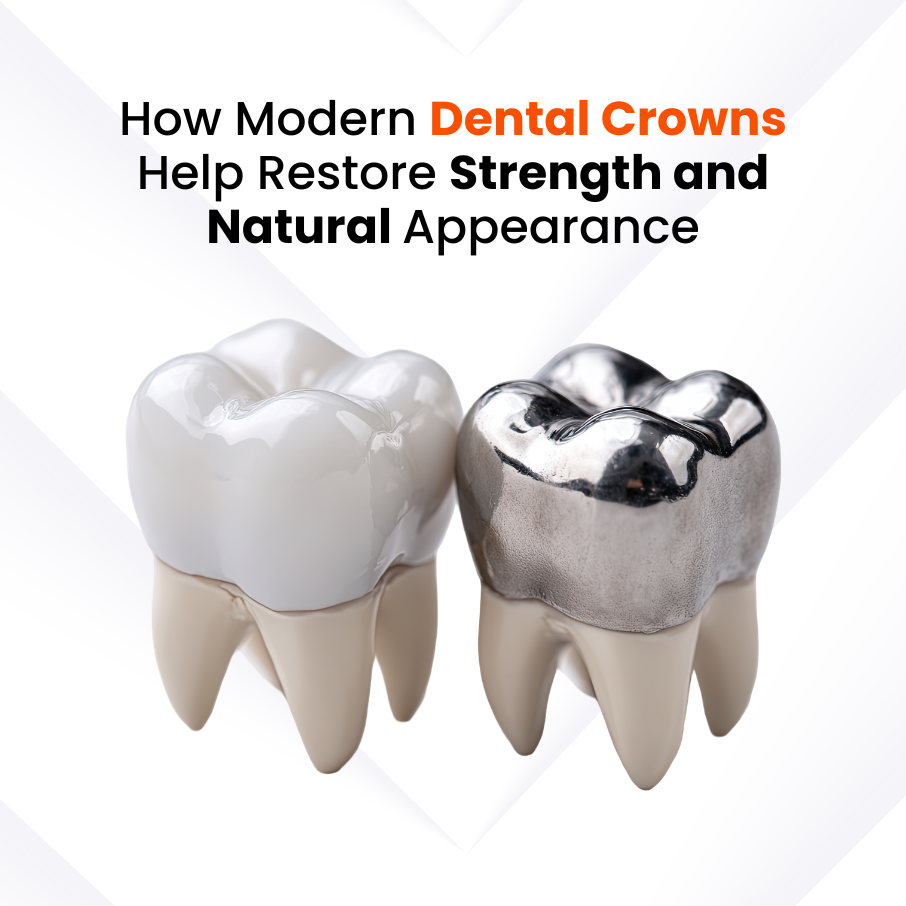
How Modern Crowns Help Restore Strength and Natural Appearance
If you have a damaged, weakened, or severely decayed tooth, you may be wondering whether it can truly look and feel normal again. The good news is that today’s dental crowns are a remarkable leap forward from what they were even a decade ago. Modern crowns are engineered not only to protect vulnerable teeth but to blend so seamlessly with your natural smile that no one will know the difference.
At Square One Health Group, our dental team uses the latest crown technology to help patients in Mississauga reclaim full chewing function and the confidence that comes with a healthy-looking smile.
What Is a Dental Crown and Why Might You Need One?
A dental crown — sometimes called a dental cap — is a custom-fitted restoration that completely encases the visible portion of a tooth above the gum line. Think of it as a protective shell that holds a damaged tooth together while restoring its original shape, size, and strength.
Crowns are recommended in a wide range of situations, including:
- A tooth that has been cracked, fractured, or severely worn
- Extensive tooth decay that a filling alone cannot address
- A tooth that has undergone root canal therapy and needs structural reinforcement
- A broken tooth following a dental injury — in which case emergency dentistry may also be required
- Covering a dental implant to create a fully functional artificial tooth
- Anchoring the ends of a fixed bridge when one or more teeth are missing
- Correcting cosmetic concerns such as severely discoloured or misshapen teeth
The critical thing to understand is that a crown does not simply cover up a problem — it actively shields the remaining tooth structure from further breakdown and re-establishes the full biting force that a damaged tooth can no longer safely handle on its own.
How Modern Crowns Are Built Differently
For many years, the standard dental crown was a porcelain-fused-to-metal (PFM) restoration. While PFM crowns served their purpose, they came with notable drawbacks: the metal substructure could cause a dark line to appear at the gumline over time, and the porcelain layer was prone to chipping under heavy biting pressure. Today’s crown materials have addressed these shortcomings in significant ways.
Zirconia Crowns
Zirconia has become one of the most widely used crown materials in modern dentistry, and for good reason. It is an all-ceramic material derived from zirconium oxide that offers extraordinary strength — comparable to metal — while still delivering a tooth-coloured appearance. Zirconia crowns are digitally milled to achieve an exceptionally precise fit, which minimises gaps where bacteria could potentially accumulate. They are particularly well-suited for molars and back teeth that endure the greatest chewing forces.
A newer innovation, monolithic zirconia, uses a single solid block of the material rather than a layered design, which virtually eliminates the risk of chipping. High-translucency zirconia has further refined the aesthetic outcome, allowing the crown to mimic the light-reflecting properties of natural tooth enamel.
Lithium Disilicate (E.max) Crowns
For front teeth where aesthetics are the top priority, lithium disilicate ceramic — commonly marketed under the brand name E.max — offers an exceptional combination of strength and lifelike translucency. This material closely replicates the way natural teeth interact with light, producing a depth and warmth that is difficult to distinguish from a real tooth. E.max crowns are pressed or milled from a single block of ceramic, giving them greater structural integrity than older layered porcelain options.
CAD/CAM Technology and Digital Impressions
Perhaps the most significant shift in crown fabrication over the past decade is the widespread adoption of computer-aided design and computer-aided manufacturing (CAD/CAM) technology. Rather than taking traditional putty impressions that patients often find uncomfortable, many dental practices now use intraoral digital scanners to create a precise 3D map of the tooth in minutes. This digital impression is then sent directly to a milling machine that carves the crown from a solid block of ceramic with a level of accuracy that the human hand simply cannot replicate.
The result is a crown that fits more predictably, requires fewer adjustments at the fitting appointment, and places less stress on the surrounding teeth and gum tissue.
Restoring Natural Appearance: The Science of Colour and Shape
One of the most common concerns patients raise before getting a crown is whether it will look obviously artificial. With modern techniques, that concern is largely a thing of the past — provided the crown is crafted by a skilled technician and placed by an experienced dentist.
Shade matching has become a sophisticated process. Your dental team will evaluate the colour of your surrounding teeth under different lighting conditions, taking into account not just the overall shade but the subtle gradients and translucency patterns that make each tooth unique. The goal is to ensure the finished crown reflects and transmits light in a way that is consistent with the teeth on either side of it.
Contour and proportion are equally important. A crown that is the right colour but the wrong shape will still look out of place. Modern restorations are designed to mirror the natural anatomy of the tooth it is replacing — matching the cusp angles, surface texture, and gumline profile to create a result that looks like it has always been there.
For patients with multiple crowns or broader cosmetic goals, crown placement is often planned in coordination with other cosmetic dentistry treatments to ensure the entire smile is harmonious and consistent.
The Crown Placement Process: What to Expect
Getting a dental crown at Square One Health Group is a straightforward process, typically completed in two appointments.
First Appointment: The tooth is numbed with a local anaesthetic, and your dentist carefully reshapes it to create room for the crown. A digital scan or traditional impression is taken, and a temporary crown is placed to protect the tooth while the permanent restoration is being fabricated.
Second Appointment: Once the permanent crown is ready, the temporary is removed, and your dentist checks the fit, bite alignment, and colour match before cementing it into place. Any minor adjustments are made chairside to ensure a comfortable, natural feel.
After placement, most patients notice little to no difference between the crowned tooth and their natural teeth when biting or chewing. Sensitivity may be present for a short period but typically resolves within a few weeks.
How Long Do Modern Dental Crowns Last?
With proper care, today’s all-ceramic crowns routinely last 10 to 15 years, and many last considerably longer. The longevity of a crown depends on several factors: the material used, the quality of the placement, and — crucially — how well you maintain your oral health after the procedure.
Crowns do not decay, but the tooth underneath them can. Plaque can accumulate at the margin where the crown meets the gumline, making diligent brushing and flossing non-negotiable. Regular teeth cleaning and dental exams are equally important, as your dentist will monitor the integrity of the crown and the health of the surrounding gum tissue at every visit.
Untreated periodontal disease is one of the most common reasons crowned teeth eventually fail — gum recession exposes the margin of the crown, and bone loss can compromise the stability of the tooth beneath. Keeping your gums healthy is therefore just as important as caring for the crown itself.
Patients who grind their teeth (bruxism) may benefit from wearing a custom night guard to protect their crowns from excessive wear. Your dentist can advise whether this applies to your situation.
Crowns Within Your Broader Oral Health Plan
A dental crown is rarely a standalone solution — it is one piece of a larger puzzle. For many patients, a crown follows a root canal or is placed to anchor a bridge after tooth loss. In other cases, it may be combined with composite fillings on adjacent teeth as part of a broader restoration plan.
If you are new to the practice and suspect you may need a crown, the right starting point is a new patient dental exam. This comprehensive assessment allows your dentist to evaluate the health of every tooth, take the necessary X-rays, and create a personalized treatment plan that addresses both your immediate concerns and your long-term oral health.
It is also worth knowing that eligible patients may be able to have crown treatment covered — at least in part — through the Canadian Dental Care Plan. Our team at Square One Health Group can help you confirm your eligibility and maximize your benefits.
Is a Dental Crown Right for You?
Modern dental crowns offer a level of strength, durability, and aesthetic refinement that was simply not achievable in previous generations of dentistry. Whether you are dealing with a cracked molar, a tooth that has recently undergone root canal treatment, or a smile you have always wanted to improve, a well-crafted crown can genuinely transform both the function and appearance of your teeth.
The best way to find out whether a crown is the right solution for your specific situation is to speak with a qualified dental professional. Our experienced dental team at Square One Health Group in Mississauga is here to guide you through every step — from your first consultation to the final placement and beyond.
Ready to restore your smile? Book your appointment today and take the first step toward a stronger, healthier, and more confident you.

At Square One Health Group, we are a dedicated team of professionals providing compassionate, patient-focused heath care in Mississauga. We specialize in family medicine, preventive health, dental care and wellness, helping patients achieve long-term health through personalized care.
Tags: