Blog
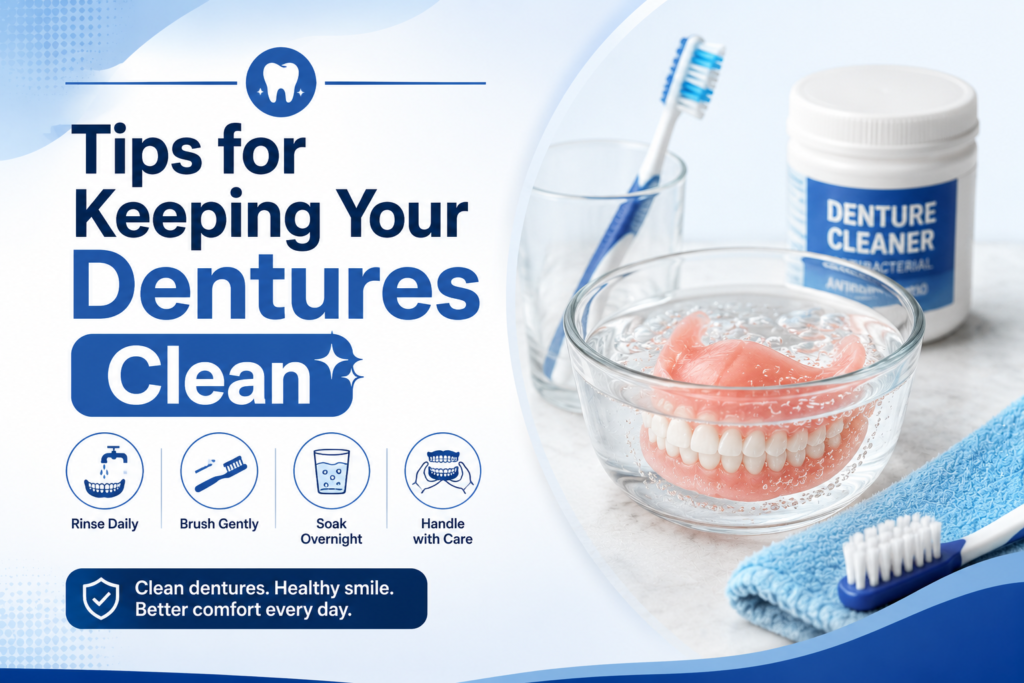
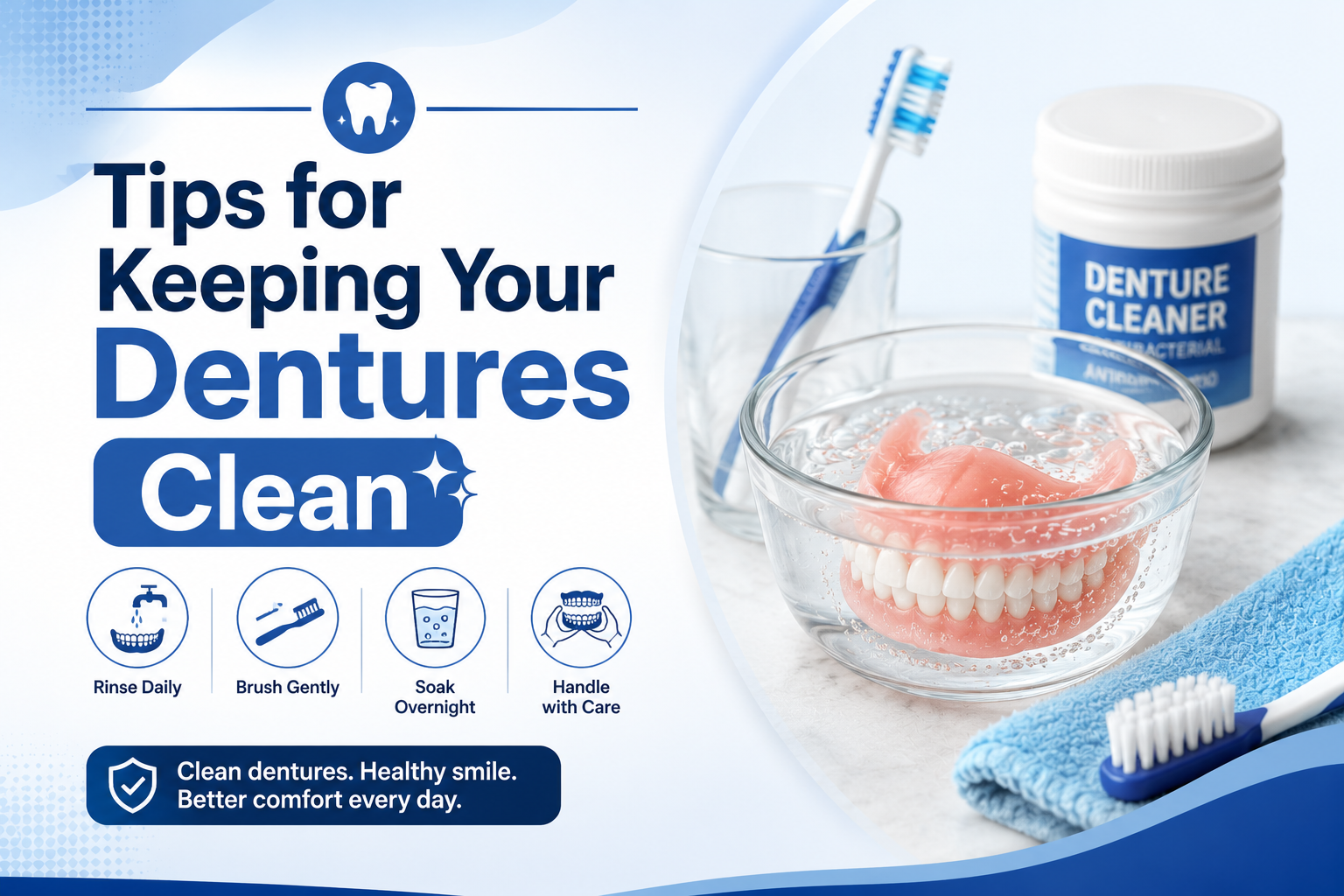
Tips for Keeping Your Dentures Clean
Proper denture care is essential for maintaining your oral health, comfort, and confidence. Whether you are newly fitted with dentures or have worn them for years, understanding how to keep your dentures clean ensures they remain functional, comfortable, and aesthetically pleasing for years to come.
Why Denture Cleaning Matters
Dentures are a significant investment in your dental health and quality of life. Unlike natural teeth, dentures don’t have the same self-cleaning mechanisms, making regular maintenance crucial. Failure to clean dentures properly can lead to fungal infections, unpleasant odors, discoloration, and deterioration of the denture material.
Additionally, poor denture hygiene can affect the health of your gums and remaining natural teeth. By establishing a consistent cleaning routine, you protect your investment and maintain optimal oral health.
Daily Denture Cleaning Steps
1. Rinse After Meals
After eating, remove your dentures and rinse them under running water. This simple step removes food particles and debris that can accumulate on the denture surface. Handle your dentures carefully over a towel or sink filled with water to prevent damage if accidentally dropped.
2. Brush Your Dentures Daily
Use a soft-bristled brush designed specifically for dentures to gently brush all surfaces, including hard-to-reach areas. A daily brushing removes plaque buildup, stains, and bacteria. Avoid using regular toothpaste, which can be too abrasive for denture materials. Instead, use a denture-specific cleaner or mild dish soap. Brush your dentures over a sink filled with water or a towel to cushion them in case of accidental drops.
3. Soak Your Dentures Overnight
Every night, soak your dentures in a denture cleaning solution, water with a denture tablet, or water mixed with a small amount of vinegar. Soaking softens stubborn stains and plaque, making them easier to remove. Most denture cleaning products contain ingredients that eliminate odor-causing bacteria and keep dentures fresh. This overnight soaking also allows your gum tissues to rest, which is essential for oral health.
4. Rinse Before Wearing
Before inserting your dentures each morning, thoroughly rinse them under running water. This removes any cleaning solution residue and loosened debris. Starting each day with freshly rinsed dentures ensures comfort and hygiene throughout the day.
Proper Denture Cleaning Supplies
Investing in the right cleaning supplies makes denture maintenance easier and more effective:
Denture Brush: A soft-bristled brush specifically designed for dentures. Regular toothbrushes can damage denture surfaces.
Denture Cleaner: Commercial denture cleaning tablets or powders that eliminate stains, odors, and bacteria effectively.
Denture Case: A ventilated case for safe denture storage, preventing damage when not wearing them.
Mild Dish Soap: A gentle alternative to denture-specific cleaners for daily brushing.
Common Denture Cleaning Mistakes to Avoid
Understanding what not to do is just as important as knowing the right cleaning methods. Here are common mistakes that can damage your dentures:
Using Abrasive Products: Harsh toothpaste, scouring powders, or bleach can scratch and damage denture surfaces, compromising their durability and appearance.
Exposing Dentures to Extreme Heat: Never use hot water, boiling water, or hot denture cleaning products, as heat can warp the denture material and affect fit.
Cleaning with Hard Brushes: Stiff-bristled brushes or rough cloths can scratch the denture surface, making them more susceptible to staining and bacterial growth.
Skipping Regular Soaking: Infrequent soaking allows plaque and bacteria to accumulate, leading to infections and unpleasant odors.
Caring for Your Gums and Remaining Teeth
Denture care doesn’t stop with the dentures themselves. Maintaining the health of your gums and any remaining natural teeth is equally important. Brush remaining natural teeth twice daily using a soft-bristled toothbrush and fluoride toothpaste. Gently clean the areas where your dentures rest to remove plaque and bacteria. Consider using antimicrobial mouthwash to reduce harmful bacteria in your mouth. If you have remaining natural teeth, ask your dentist about best practices for maintaining them alongside your denture care routine. Learn more about proper home care techniques from the specialists at Square One Health Group.
Professional Denture Care at Square One Health Group
While daily home care is essential, professional denture maintenance should be part of your regular routine. The experienced dental team at Square One Health Group can provide professional cleaning services that remove stubborn stains and buildup that home care alone cannot eliminate. Our specialists offer comprehensive denture services, including adjustments, repairs, and professional cleaning. Periodic professional cleanings complement your daily denture care routine and help extend the life of your dentures. Additionally, regular dental exams ensure your dentures fit properly and address any oral health concerns promptly.
When to Replace or Adjust Your Dentures
Even with excellent care, dentures typically need to be replaced every 5-8 years as the denture material wears and your jaw structure changes. Signs that your dentures need attention include loose fit, difficulty chewing, visible cracks or chips, persistent sore spots, and changes in speech. If you experience any of these issues, schedule an appointment with your dental professional. The team at Square One Health Group specializes in denture adjustments and replacements, ensuring your dentures continue to provide optimal comfort and function.
Storage and Handling Tips
Proper storage protects your dentures when you’re not wearing them. Always store dentures in a case filled with water or denture solution to prevent them from drying out and warping. Never wrap them in tissue or cloth, as they can be accidentally discarded. Keep your denture case in a safe location away from pets and children. If you travel, invest in a travel-sized denture case and bring your denture cleaning supplies with you. Avoid leaving dentures exposed to sunlight or heat sources.
Conclusion
Maintaining clean, well-fitted dentures is a straightforward process when you follow these proven cleaning and care strategies. By establishing a consistent daily routine, using appropriate cleaning products, and seeking professional care when needed, you ensure your dentures remain comfortable, functional, and attractive for years to come. Remember that your denture investment deserves the same attention and care as natural teeth. If you have questions about proper denture care or need professional assistance, the dental experts at Square One Health Group in Mississauga are ready to help. Schedule your consultation today and discover how our comprehensive denture services can enhance your smile and quality of life. Contact us for more information.
Frequently Asked Questions About Denture Care
How often should I clean my dentures?
You should clean your dentures at least once daily, preferably twice. Rinse them after meals, brush them gently, and soak them overnight in a denture cleaning solution. This routine removes plaque, bacteria, and food particles, keeping your dentures fresh and hygienic.
Can I use regular toothpaste to clean my dentures?
No, you should not use regular toothpaste on dentures. Toothpaste is often too abrasive for denture materials and can scratch the surface, causing discoloration and damage. Instead, use a denture-specific cleaner, mild dish soap, or a solution recommended by your dentist.
Is it safe to wear dentures while sleeping?
Most dental professionals recommend removing dentures before sleeping to allow your gums to rest and breathe. This helps prevent irritation, fungal infections, and other oral health issues. However, some patients choose to wear their dentures at night. Discuss your specific situation with your dentist to determine the best approach for your oral health.
What should I do if my dentures develop a persistent odor?
Odor usually indicates bacterial or fungal growth. Ensure you’re soaking your dentures daily in a proper cleaning solution. You can also try soaking them in a solution of equal parts white vinegar and water for 30 minutes, then brushing and rinsing thoroughly. If the odor persists, consult your dentist, as it may indicate a more serious issue requiring professional treatment.
Can I wear my dentures while exercising or playing sports?
Yes, you can wear dentures during exercise and sports. However, if you engage in contact sports, consider a mouthguard designed for denture wearers to provide extra protection. After vigorous activity, rinse your dentures to remove sweat and bacteria. If you feel uncomfortable wearing dentures during physical activity, consult your dentist about alternatives.
How do I handle dentures that have been accidentally dropped?
Accidental drops can crack or chip dentures. After a drop, carefully inspect your dentures under good lighting for visible damage. Even hairline cracks may allow bacteria to enter, compromising hygiene and fit. If you suspect damage, contact your dentist immediately. Never attempt to repair dentures yourself, as improper repairs can cause further damage or make them unwearable.
What’s the difference between partial and complete denture care?
Partial dentures require special attention to both the denture itself and remaining natural teeth. Clean natural teeth thoroughly before removing partial dentures. The clasps on partial dentures need careful brushing to prevent plaque buildup around them. Complete dentures can soak overnight without concern for natural teeth but still require daily brushing and proper storage. Both types benefit from periodic professional cleaning and adjustment by your dentist.
How long do dentures typically last with proper care?
With excellent daily care and professional maintenance, well-made dentures typically last 5-8 years before needing replacement. However, your jaw structure naturally changes over time, requiring periodic adjustments to your dentures for proper fit and comfort. Regular dental visits ensure your dentures are adjusted as needed, extending their usable lifespan and maintaining your oral health.

At Square One Health Group, we are a dedicated team of professionals providing compassionate, patient-focused heath care in Mississauga. We specialize in family medicine, preventive health, dental care and wellness, helping patients achieve long-term health through personalized care.
Tags: