Blog
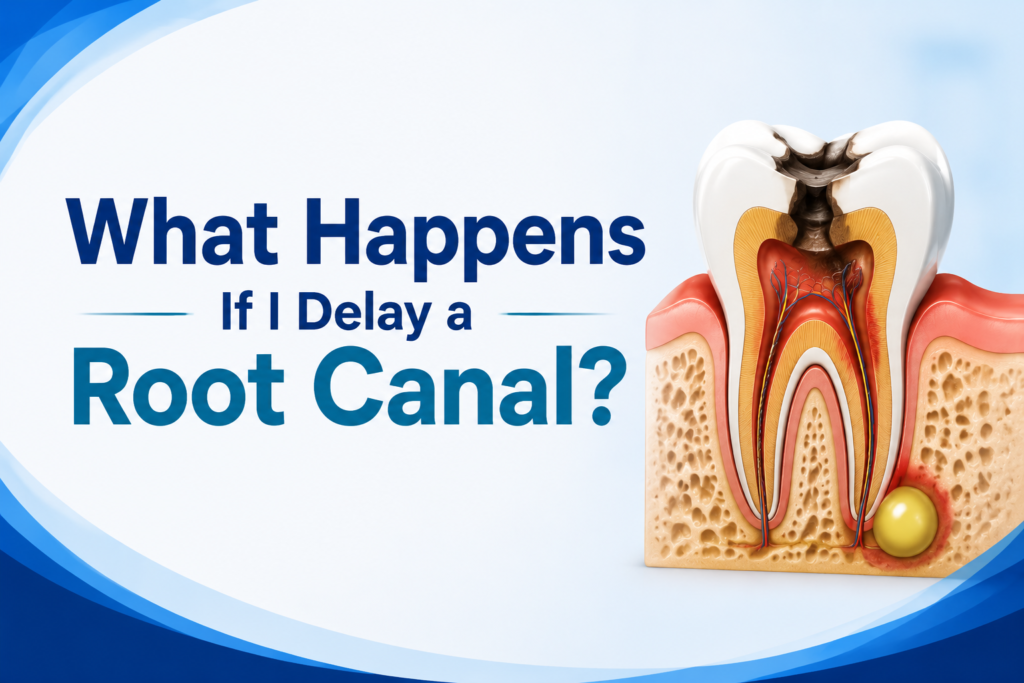
What Happens If I Delay a Root Canal?
Hearing that you need a root canal can make you feel nervous, and it is common to wonder if the treatment can wait. Whether it is because of a busy schedule, concerns about the procedure, or the hope that the pain will go away on its own, many people postpone treatment. Unfortunately, delaying a root canal often allows the problem to become more serious.
A root canal is recommended when the soft tissue inside a tooth, known as the pulp, becomes infected or severely damaged. Unlike minor dental problems, an infected pulp cannot heal naturally. Without treatment, the infection continues to spread, increasing the risk of pain, tooth loss, and complications that may affect your overall health.
Understanding what happens when a root canal is delayed can help you make informed decisions and protect both your oral health and your natural smile.
Why Would You Need a Root Canal?
A root canal is performed when bacteria reach the inner part of the tooth through deep decay, a crack, repeated dental procedures, or trauma. The infection damages the pulp, causing inflammation and pain.
The purpose of root canal treatment is to remove the infected tissue, clean the root canals, and seal the tooth to prevent further infection. In many cases, this treatment allows you to keep your natural tooth for many years.
Ignoring the problem does not eliminate the infection. Instead, it gives bacteria more time to spread deeper into the tooth and surrounding tissues.
Can an Infected Tooth Heal Without Treatment?
Many people hope that if the pain disappears, the tooth has healed. Unfortunately, this is not how dental infections work.
As the infection progresses, the nerve inside the tooth may die. Once this happens, the pain may temporarily decrease because the nerve can no longer send pain signals. However, the bacteria remain inside the tooth and continue spreading into the surrounding bone and gums.
Without professional treatment, an infected tooth cannot repair itself. The infection will continue to worsen even if the symptoms seem less noticeable.
Increased Tooth Pain
One of the first consequences of delaying a root canal is worsening pain. The discomfort may begin as mild sensitivity to hot or cold foods, but it often develops into constant or severe pain that interferes with eating, sleeping, and daily activities.
The pressure created by inflammation inside the tooth has nowhere to escape, which causes increasing discomfort. Many people find that the pain becomes more intense at night or when lying down.
Seeking treatment early can prevent the pain from becoming difficult to manage.
The Infection Can Spread
An untreated tooth infection does not remain confined to the inside of the tooth. As bacteria continue to multiply, they can spread beyond the root into the surrounding tissues.
The infection may affect the gums, jawbone, and nearby teeth. In advanced cases, it can create larger areas of inflammation that require more extensive treatment than a simple root canal.
Stopping the infection early is one of the main reasons dentists recommend prompt treatment.
Formation of a Dental Abscess
One of the most serious complications of delaying a root canal is the development of a dental abscess.
A dental abscess is a pocket of pus that forms when the body’s immune system attempts to fight the infection. This condition often causes severe pain, swelling, and tenderness around the affected tooth.
Some people notice a small bump on the gum that may release fluid with an unpleasant taste or smell. Although this drainage may temporarily reduce discomfort, it does not eliminate the infection.
An untreated abscess can continue growing and may require emergency dental care.
Risk of Tooth Loss
The longer an infection remains untreated, the greater the chance that the tooth cannot be saved.
As bacteria destroy the supporting structures around the tooth, the damage may become too extensive for root canal treatment. When this happens, tooth extraction may become the only remaining option.
Losing a natural tooth can affect your ability to chew comfortably, alter your bite, and lead to shifting of neighboring teeth. Replacing a missing tooth with a dental implant or bridge is often more costly and time-consuming than saving the original tooth with a root canal.
Damage to the Surrounding Bone
An untreated infection can gradually destroy the bone that supports the tooth.
Bone loss weakens the foundation of the affected tooth and may also impact nearby teeth. Even after the infection has been treated, significant bone loss may require additional procedures before the area can fully recover.
Preserving the supporting bone is another important reason not to postpone treatment.
Higher Treatment Costs
Delaying a root canal may increase the overall cost of dental care.
When the infection is treated early, the procedure is often straightforward. However, advanced infections may require additional appointments, drainage of an abscess, tooth extraction, bone grafting, or replacement of the missing tooth with a dental implant or bridge.
Addressing the problem promptly is usually the most cost-effective approach in the long term.
Longer and More Complex Treatment
A simple infection detected early may be completed in one root canal appointment. If treatment is delayed, the procedure may become more complicated.
The dentist may need additional visits to eliminate the infection completely, place medication inside the tooth, or manage surrounding tissue damage before the tooth can be restored.
Early treatment generally leads to a smoother and more predictable recovery.
Possible Effects on Overall Health
Although tooth infections usually remain localized, severe untreated infections can sometimes spread beyond the mouth.
Bacteria may enter nearby tissues and, in rare situations, spread to other parts of the body. Individuals with weakened immune systems or certain medical conditions may face a greater risk of complications from untreated dental infections.
While serious health problems are uncommon, they highlight the importance of treating dental infections before they progress.
Signs That You Should Not Ignore
Certain symptoms suggest that an infected tooth requires immediate dental attention.
These warning signs include:
- Persistent tooth pain that does not improve
- Severe sensitivity to hot or cold temperatures
- Swollen or tender gums
- Pain while chewing or biting
- A darkened tooth
- Swelling of the face or jaw
- A pimple-like bump on the gums
- Bad taste or drainage near the affected tooth
These symptoms should be evaluated by a dentist as soon as possible to prevent further complications.
Can the Tooth Still Be Saved?
In many cases, yes. Even if the infection has progressed, root canal treatment can often save the tooth if enough healthy structure remains.
The sooner treatment begins, the greater the chance of preserving your natural tooth. Waiting too long increases the possibility that the damage will become irreversible, making extraction necessary.
A dental examination and X-rays will help determine whether the tooth can still be restored.
How to Prevent Root Canal Problems
Good oral hygiene and regular dental care can significantly reduce the risk of developing infections that require root canal treatment.
Brush your teeth twice every day using fluoride toothpaste and clean between your teeth daily with dental floss or interdental cleaners. Visit your dentist regularly for examinations and professional cleanings, as small cavities can often be treated before they reach the tooth’s pulp.
It is also important to wear a protective mouthguard during contact sports and avoid chewing hard objects that may crack your teeth.
Preventive care is always simpler, less expensive, and more comfortable than treating advanced dental problems.
Conclusion
Delaying a root canal may seem harmless at first, especially if the pain comes and goes. However, an infected tooth cannot heal without professional treatment. Waiting often allows the infection to spread, increasing the risk of severe pain, dental abscesses, bone loss, tooth extraction, and more complex treatment.
If your dentist recommends a root canal, timely care offers the best opportunity to relieve discomfort, eliminate infection, and preserve your natural tooth. Seeking treatment early not only protects your oral health but also helps you avoid unnecessary complications and additional dental expenses in the future. Contact us for more information

At Square One Health Group, we are a dedicated team of professionals providing compassionate, patient-focused heath care in Mississauga. We specialize in family medicine, preventive health, dental care and wellness, helping patients achieve long-term health through personalized care.
Tags: